Caught in the Pull: A Real Survival Guide to Rip Currents on Dominican Beaches
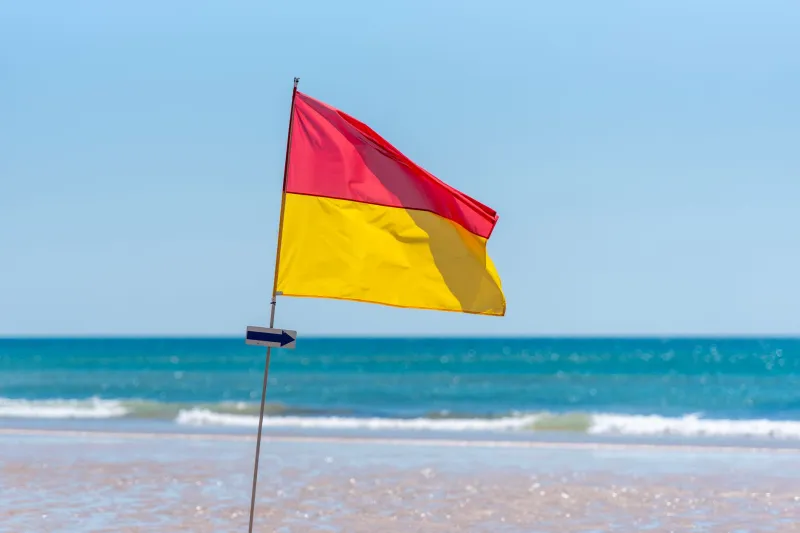
You're waist-deep in that impossibly blue Caribbean water, the sun is doing its thing, and life is good. Then something shifts. The beach seems to be drifting away from you—faster than it should. You start swimming harder. The shore doesn't get closer. Your heart rate spikes.
This is a rip current. And right now, what you do in the next sixty seconds matters more than anything else about your vacation.
Rip currents are responsible for the majority of ocean rescues worldwide, and the Dominican Republic—with its mix of exposed northern shores, reef-lined southern coasts, and everything in between—is no exception. Yet most US travelers show up armed with nothing more than a vague memory of a middle school health class. That's not enough.
We spent time talking with Dominican water rescue professionals, lifeguards stationed along the north coast, and a handful of beachgoers who've been in the pull and made it back. Here's what they actually told us.
What a Rip Current Actually Is (And Isn't)
Let's kill the biggest myth first: a rip current is not an undertow. It will not drag you underwater and drown you from below. It is a fast-moving channel of water flowing away from shore, typically moving at speeds between 1 and 8 feet per second. That's faster than an Olympic swimmer at full sprint.
Rip currents form when water pushed toward shore by waves needs somewhere to go. It funnels into low-pressure channels—gaps in sandbars, breaks in reefs, or natural depressions in the seafloor—and rushes back out to sea in a narrow stream. The current itself isn't deep. It's just relentlessly outward.
"People panic because they think the ocean is swallowing them," says Ramón, a water rescue coordinator who has worked beaches from Las Terrenas to Cabarete for over a decade. "But the water isn't pulling you down. It's pulling you out. That's a very different problem with a very different solution."
How to Spot One Before You're In It
This is where most beach safety advice falls short. Telling people to "watch for rip currents" without explaining what to actually look for is useless.
Here's what you're scanning for:
- Choppy, churning water in a narrow channel between calmer sections on either side
- Discolored water—often darker, murkier, or foamy—cutting through the surf zone in a roughly straight line toward open water
- Debris or foam lines moving steadily seaward, even when surrounding water seems calm
- A gap in the breaking waves—if waves are breaking consistently on either side but there's a calm-looking corridor in the middle, that calm is a lie
On Dominican beaches, rip currents are especially common near rocky outcroppings, piers, jetties, and reef breaks. Beaches like Playa Grande on the north coast and sections of the Samaná Peninsula can generate powerful rips after storm swells. Even gentler tourist beaches in Bávaro and Punta Cana aren't immune—particularly after weather systems pass through.
Before you get in the water anywhere, spend five minutes just watching. Watch how the water moves. Watch where the waves aren't breaking. Watch for foam trails heading offshore. That five minutes might be the most useful thing you do all day.
You're In One. Now What?
Okay. You've been caught. You're moving away from shore and swimming hard isn't helping. Your instinct is screaming at you to fight it head-on. Here's the hard truth: that instinct will exhaust you.
Do not swim directly back to shore against the current. This is the single most dangerous mistake people make. Rip currents are narrow—typically between 20 and 100 feet wide—but they are stronger than you. Fighting straight back is how swimmers exhaust themselves and drown.
Instead, here's the evidence-based approach rescue professionals actually recommend:
1. Don't panic. Seriously. Easier said than done, but panic burns energy and causes poor decisions. Remind yourself: the current is not trying to drown you. It's just moving water.
2. Float and signal. If you're not a strong swimmer, this is your primary move. Float on your back, wave one arm above your head, and call for help. Conserve energy. Many rescues happen because someone was visible and calm.
3. Swim parallel to shore. Escape the channel by moving sideways—parallel to the beach, not toward it. You're trying to get out of the fast-moving lane, not fight it. Once you're out of the current's pull, the water will feel different. Then angle back toward shore.
4. If you can't escape, ride it out. Some rip currents extend past the breaking waves and then dissipate in calmer open water. If you're being carried out and can't break free laterally, let it carry you past the surf zone. The current will weaken. Then swim diagonally back to shore.
"The people who get in real trouble are the ones who exhaust themselves in the first two minutes," Ramón told us. "If you can stay calm for sixty seconds and think, you have a very good chance of getting out."
The Myths That Actually Get People Killed
A few dangerous ideas keep circulating online and in casual beach conversation. Let's put them down.
Myth: Strong swimmers are safe from rip currents. Nope. Rip currents have drowned competitive swimmers and former lifeguards. Strength doesn't matter if you're fighting in the wrong direction.
Myth: If the water looks calm, it's safe. Calm-looking corridors through the surf are often exactly where rips are running. Calm appearance can mean the water is moving offshore rather than churning in place.
Myth: You can always tell a rip current from shore. Sometimes yes, sometimes no. Conditions change. A beach that was safe at 9 a.m. can develop rips by early afternoon as wave patterns shift.
Myth: Only big waves create rip currents. Rips can form in relatively modest surf. Some of the most dangerous occur on days that look perfectly swimmable.
Practical Steps Before You Ever Hit the Water
- Swim at beaches with lifeguards. This sounds obvious, but a surprising number of travelers wander to unguarded stretches of coastline. Many resort beaches have lifeguard coverage; many public beaches do not.
- Ask locals. Hotel staff, beach vendors, and fishermen often know which spots run rips regularly. This is genuinely useful local knowledge.
- Check conditions. After storms or during periods of heavy swell, rip current risk spikes significantly. The north coast of the DR is particularly exposed to Atlantic swell systems.
- Never swim alone. If you're caught and someone sees you, your odds go up dramatically.
- Wear a bright swimsuit. Visibility matters if you need to be spotted from shore.
The Takeaway
The Dominican Republic's beaches are genuinely spectacular, and the ocean here is worth every second you spend in it. But the water doesn't know you're on vacation. Rip currents are a real and consistent hazard along this coastline, and the difference between a scary moment and a tragedy is almost entirely about preparation and knowledge.
Read the water before you enter it. Know what to do if you're caught. And if you're ever unsure—just don't go in. The beach will still be there tomorrow.
The ocean is worth respecting. And once you do, it gives back tenfold.