Beyond Rainy Season: The Real Science of When Dominican Beaches Are Actually Worth Visiting
Most US travelers planning a Dominican Republic vacation do the same quick Google search: best time to visit Dominican Republic. They skim a results page, see something about a dry season running roughly from November through April, and book accordingly. Done. Simple.
Except it's really not that simple.
The Dominican Republic sits on an island that straddles two entirely different ocean systems, hosts a mountain range that creates its own weather, and deals with seasonal seaweed migrations that can turn a postcard-perfect beach into something resembling a compost pile—sometimes within the span of a week. The good news? Once you understand how these forces actually interact, you can plan a trip that puts you in exactly the right place at exactly the right time. That's what this guide is for.
The Two-Ocean Problem Nobody Talks About
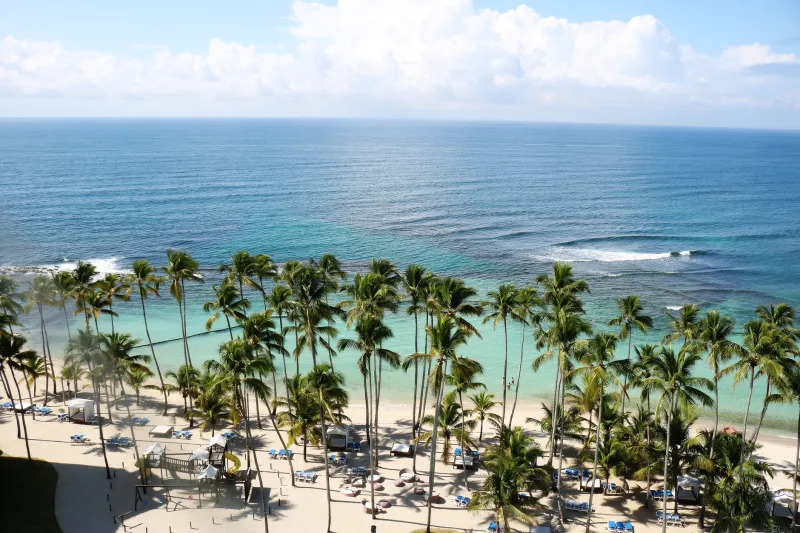
Here's the geographic reality that changes everything: the Dominican Republic is flanked by the Atlantic Ocean to the north and the Caribbean Sea to the south. These are not interchangeable bodies of water. They behave differently, feel different, and respond to seasons differently.
The north coast—think Cabarete, Las Terrenas, Playa Dorada—faces the Atlantic, which means it gets more wind, choppier swells, and a more dramatic seasonal personality. The south and southwest coasts—Barahona, Pedernales, parts of the Gulf of Arrows—sit along the calmer Caribbean, where the water tends to be flatter, warmer, and more forgiving across a longer stretch of the year.
What this means practically: a traveler visiting in July might find the north coast whipped up by Atlantic trade winds while the south coast is mirror-calm. Another traveler in February might experience the exact opposite situation on a particularly breezy week. Treating the entire island as one weather unit is where most trip-planning goes sideways.
Sargasso Season: The Floating Problem You Need to Know About
If you've never heard of sargassum, consider this your heads-up. Sargassum is a type of brown seaweed that blooms in massive quantities in the Sargasso Sea and gets pushed by Atlantic currents toward Caribbean coastlines. Starting around 2011, these blooms began arriving in unprecedented volumes, and they haven't really let up since.
For Dominican beaches, sargasso season typically peaks between April and October, with the heaviest accumulations often hitting in June and July. The north and east coasts—particularly around Punta Cana and the Samaná Peninsula—tend to receive the brunt of it, since they're more directly in the path of Atlantic drift currents.
The south coast, shielded by the island's geography, generally sees far less sargassum. Beaches around Barahona and the southwest are some of the least affected in the country.
Here's the honest truth: sargassum accumulation varies wildly year to year and even week to week. There's no guarantee a beach will be clear or covered on any given day. But if avoiding it entirely is a priority, booking a south coast trip in winter months gives you the best statistical odds. If you're set on Punta Cana or the north coast, aim for November through February, when blooms are at their lowest.
What the Trade Winds Are Actually Doing
The Dominican Republic's trade winds blow predominantly from the northeast, and they're not just a weather footnote—they shape entire beach experiences.
On the north coast, these winds are the reason Cabarete has become one of the world's top kiteboarding destinations. Between June and September, the trades kick into high gear, creating consistent 15-25 mph conditions that windsurfers and kiters absolutely love. For everyone else looking for a calm swim? Less ideal.
Conversely, the winter months on the north coast (December through February) can bring their own challenges. Cold fronts occasionally push down from North America, creating rough Atlantic swells that make swimming inadvisable for a few days at a time. These are called nortes locally, and while they're usually short-lived, they're worth being aware of if you're planning a beach-heavy itinerary.
The south coast and southwest tend to be more sheltered from the trades, which is why those waters stay calmer for longer stretches. If flat, swimmable water is your primary goal, that's where the calendar works most consistently in your favor.
The Mountain Effect: How the Cordillera Central Splits the Country's Weather
The Dominican Republic's interior mountain range—the Cordillera Central, home to Pico Duarte, the Caribbean's highest peak—acts as a giant weather divider. It forces incoming Atlantic moisture to rise, cool, and dump rain on the northern slopes, while the southern side sits in a relative rain shadow.
This is why the north and east coasts tend to get more rainfall overall, especially during the official rainy season (roughly May through October). But here's the nuance most guides miss: rain in the DR rarely means a ruined beach day. Tropical showers tend to be intense, brief, and followed by full sunshine. A week on the north coast in August might include a daily 45-minute downpour at 3 p.m. and otherwise gorgeous conditions.
The south coast, in its rain shadow, is genuinely drier—sometimes dramatically so. The far southwest around Pedernales borders one of the Caribbean's only true desert zones. That region sees almost no rain year-round, but it also gets intense midday heat that can make beach time uncomfortable without shade.
The Practical Breakdown: Timing by What You Want
Let's cut to the actual planning utility here.
You want calm, clear water for swimming and snorkeling: Target the south coast or the protected bays of the Samaná Peninsula between December and March. Avoid the open north coast during summer wind season.
You want to dodge sargassum: Prioritize south coast beaches year-round, or any coast during November through February. Check real-time sargassum tracking maps (yes, these exist—the University of South Florida publishes updated satellite imagery) before you finalize plans.
You want adventure sports: Cabarete's north coast between June and September is purpose-built for this. The same winds that complicate swimming are exactly what kiters and windsurfers are paying for.
You want fewer crowds and lower prices: May and June offer a sweet spot—the peak tourist crush has eased, sargasso season is just starting (hit or miss), and prices drop noticeably. Early December before the holiday rush is another underrated window.
You want the most reliable all-around beach conditions: Late November through mid-January is genuinely the DR's most consistently pleasant coastal window across most regions. Temperatures are comfortable, winds are moderate, rain is minimal, and the water is clear.
One More Thing Worth Knowing
Tidal ranges in the Dominican Republic are relatively modest compared to, say, the US Pacific Northwest—typically less than two feet. So tidal timing won't dramatically reshape your beach access the way it might in other destinations. What matters far more here is swell direction, wind strength, and seasonal seaweed patterns than the specific hour of high or low tide.
The bottom line: the Dominican Republic rewards travelers who do a little homework before they book. Understanding which coast faces which ocean, what the winds are doing in your target month, and whether sargasso blooms are historically likely turns a good trip into a great one. The beaches here are genuinely spectacular—you just want to show up when they're showing off.