No Plane Required: How to Reach Other Caribbean Islands Straight From the DR's Beaches
Most US travelers land in the Dominican Republic, plant themselves on a beach, and never think about what's just over the water. That's fine — the DR has enough coastline to keep you busy for weeks. But if you've got the itch to see more of the Caribbean without dealing with another airport security line, you're in luck. The DR sits in one of the most navigable stretches of the Caribbean Sea, and with the right planning, you can reach multiple neighboring islands by boat.
This isn't a fantasy itinerary. It's a practical breakdown of what's actually doable, what it costs, and which Dominican beach towns give you the best shot at pulling it off.
Why the DR Is a Surprisingly Good Hub for Sea Travel
Geography is on your side here. The Dominican Republic shares the island of Hispaniola with Haiti to the west, sits relatively close to Puerto Rico to the east, and has the Turks and Caicos chain practically in its backyard to the north. The Mona Passage — the stretch of water between the DR and Puerto Rico — is navigable, and the channels between the DR's northern coast and the Turks and Caicos are well-traveled by charter operators.
That said, "possible" and "easy" aren't the same thing. Some of these crossings require advance planning, the right connections, and a willingness to embrace a little Caribbean unpredictability. Here's how each route actually breaks down.
Haiti: The Closest Crossing You Probably Haven't Considered
Haiti shares a land border with the DR, which means you can technically cross overland — but the more interesting option for beach-focused travelers is the coastal route. From the DR's northwest coast near Monte Cristi or Pedernales in the southwest, the Haitian border is genuinely close.
Small boat crossings and informal charters do exist, particularly among locals and traders, but organized tourist ferry service between the two countries is inconsistent at best. The political situation in Haiti as of recent years has made this crossing increasingly complicated, and the US State Department has maintained travel advisories for Haiti that you should absolutely read before considering any cross-border trip.
Bottom line: this crossing is geographically easy but logistically and safety-wise complicated right now. Check current advisories and talk to local operators before committing.
Turks and Caicos: The Most Underrated Option
This is the one that surprises most people. The Turks and Caicos Islands sit roughly 90 miles north of the DR's Samaná Peninsula — close enough that private charter operators run occasional crossings, particularly out of the Las Galeras or Las Terrenas areas.
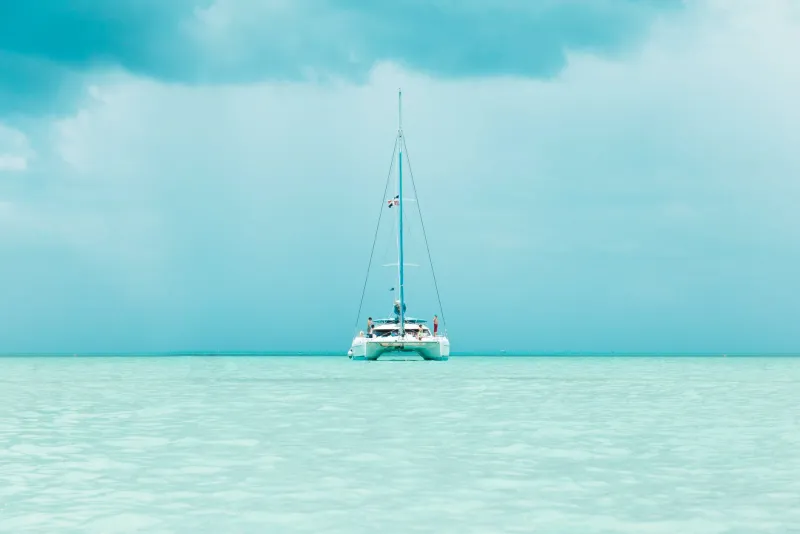
You won't find a scheduled ferry service here, but private sailing charters and powerboat operators do make this run. Expect to pay anywhere from $400 to $800+ per person for a day charter depending on group size, boat type, and whether meals are included. The crossing takes roughly 3 to 5 hours by speedboat depending on conditions.
The appeal is obvious: Turks and Caicos has some of the most jaw-dropping water in the entire Caribbean, and combining a few days in Samaná with a run up to Grace Bay is genuinely one of the more underrated Caribbean itineraries you can build. Ask around in Las Terrenas — some charter operators advertise quietly, and guesthouses often have contacts.
Puerto Rico: A Real Option With Actual Infrastructure
The Mona Passage between the DR's eastern coast and Puerto Rico is about 80 miles wide. It's also known for being one of the rougher stretches of open water in the Caribbean, with strong currents and unpredictable swells. That said, it's navigated regularly by sailboats and private vessels.
There is no commercial passenger ferry between the DR and Puerto Rico at this time, though this route has been discussed and attempted by operators over the years. Your realistic option here is a private sailing charter or crewed yacht. From the Samaná Peninsula or from Punta Cana-adjacent marinas, operators can arrange multi-day passages to Puerto Rico. Budget at least $1,500–$3,000+ for a crewed passage depending on boat size and duration.
This is more of a sailing adventure than a casual day trip. If you're a sailor or traveling with one, it's a bucket-list crossing. If you're just looking for a quick island hop, flying remains the practical choice for Puerto Rico.
The Samaná Peninsula: Your Best Base for All of This
If island-hopping by sea is genuinely part of your plan, the Samaná Peninsula is where you want to be based. It's the DR's northeastern arm, jutting out toward the open Atlantic, and it's home to the most active charter and boat tour scene outside of Punta Cana.
Las Terrenas and Las Galeras both have operators who run everything from whale-watching excursions to multi-day sailing trips. The marina infrastructure is modest but functional. More importantly, the culture here is genuinely oriented toward the sea in a way that resort-heavy areas like Bávaro simply aren't. You'll find boat captains who know these waters, speak enough English to plan a trip, and are accustomed to working with US travelers.
Santo Domingo also deserves a mention. The capital has a working port and access to charter operators, and it's the most logical jumping-off point for anyone trying to piece together a more ambitious multi-island itinerary.
What to Know Before You Book Anything
A few practical notes that will save you headaches:
Customs and immigration matter. Even a day trip to another country means you'll need your passport, and depending on your destination, you may need to go through formal entry procedures. Don't assume a charter operator has handled this for you — ask explicitly.
Weather windows are everything. The Caribbean is generally calmer from December through April. Summer and fall bring more wind, rougher seas, and hurricane risk. If you're planning a serious crossing, time it during the dry season.
Vet your operator carefully. Not every boat captain advertising "island tours" is equipped for open-water crossings. Ask about the vessel, safety equipment, and whether they've done the specific crossing before. Reviews and word-of-mouth from your guesthouse or hotel are worth more than any website listing.
Build in flexibility. Sea crossings get canceled. Swells come up. Engines have bad days. If you have a flight home on a specific date, don't schedule a boat crossing the day before.
The Bigger Picture
Using the DR as a home base for Caribbean exploration is genuinely underrated. Most travelers treat it as a destination in itself — which it absolutely is — but its geography makes it one of the better springboards in the region. You don't have to choose between staying planted on a beautiful Dominican beach and seeing more of the Caribbean. With the right planning and a willingness to embrace some sea-legs, you can do both.
Start with Samaná. Talk to the boat guys. See what's possible. The Caribbean is a lot smaller than it looks on a map.