Under the Surface: The Dominican Republic's Best Snorkeling and Diving Spots, Ranked by Skill Level
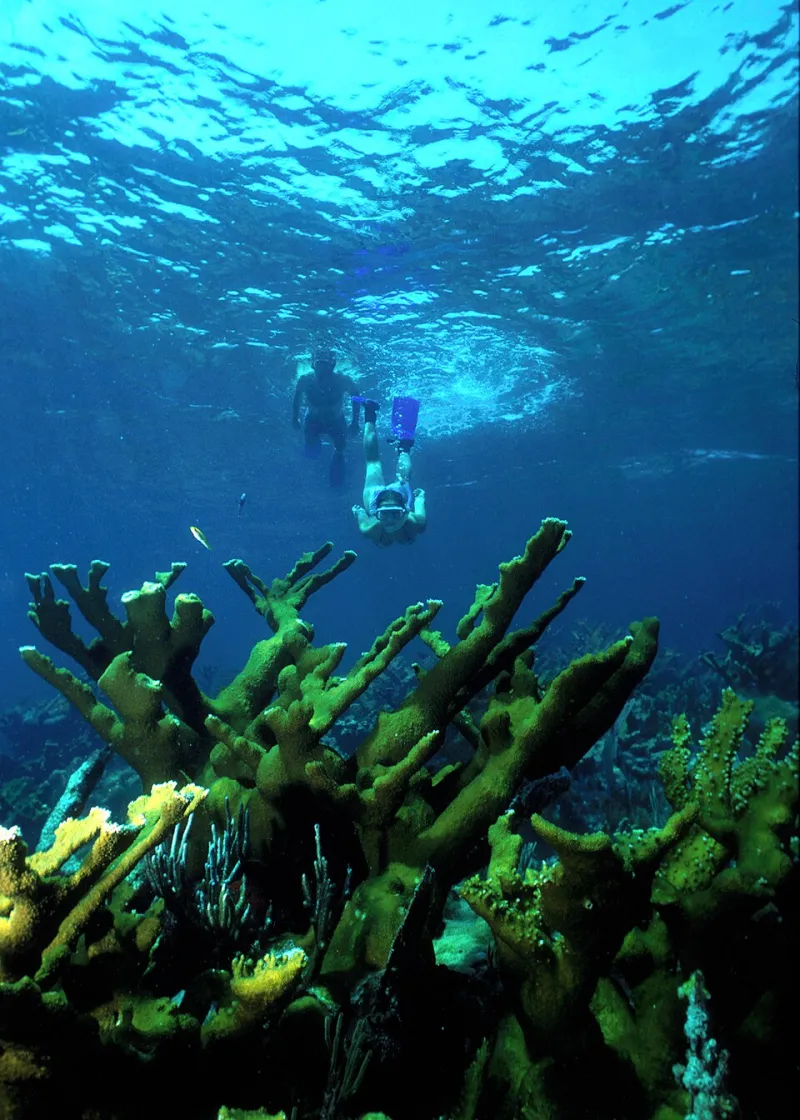
Photo: National Park Service/John Brooks, Public domain, via Wikimedia Commons
Most visitors to the Dominican Republic spend their time horizontal — stretched out on white sand, drink in hand, sun doing its thing. Which is completely valid. But just beneath the surface of those impossibly blue waters, there's an entirely different world happening, and a lot of US travelers are missing it entirely.
The DR sits at a geographic sweet spot. It's surrounded by both the Atlantic Ocean and the Caribbean Sea, which means wildly different underwater environments depending on which coast you're exploring. Reef systems, underwater caves, WWII-era wrecks, humpback whale migration corridors — it's genuinely varied. Here's how to find what fits your experience level.
For First-Timers and Casual Snorkelers
Bayahibe and the Parque Nacional del Este
If you've never snorkeled before — or you've only done it in calm resort lagoons — Bayahibe is your starting point. The water here is shallow, warm, and clear, with visibility that regularly hits 60–80 feet. The coral gardens just offshore host sea turtles, spotted eagle rays, and clouds of parrotfish and angelfish. You don't need a guide to access these areas, though a boat trip into the Parque Nacional del Este opens up even richer reef sections that snorkelers can explore from the surface.
Best months: April through June, before hurricane season picks up. Water temps hover around 80°F year-round.
Sosúa Bay (Puerto Plata Coast)
Sosúa is one of the most beginner-friendly dive and snorkel destinations in the entire Caribbean. The bay is naturally protected, so conditions are usually calm even when the Atlantic is doing something dramatic just outside. Snorkelers can wade in from the beach and immediately encounter sponges, brain coral, and reef fish in relatively shallow water. Visibility is excellent, and the sandy bottom makes it easy to orient yourself.
Several dive shops along the beach offer snorkel gear rentals for around $10–15 USD, and the snorkeling is genuinely good without any boat ride required.
Intermediate Snorkelers and Entry-Level Divers
Las Galeras, Samaná Peninsula
This is where things get more interesting. Las Galeras sits at the eastern tip of the Samaná Peninsula, and the surrounding waters are significantly less trafficked than the resort corridors. Boat trips from the village take you to sites like Cabo Cabrón, where dramatic underwater rock formations meet healthy coral and an impressive variety of marine life — including nurse sharks resting on the sandy bottom.
For divers just getting comfortable with open water, depths here range from about 30 to 60 feet, which is manageable while still offering genuine diversity. The topography is more dramatic than the flat reefs around Bayahibe, so there's more to explore.
Isla Catalina
Just offshore from La Romana, Isla Catalina is a small, uninhabited island with a reef system that works for both snorkelers and divers. The famous "Wall" here — a coral drop-off that plunges from about 15 feet to well over 100 — is accessible to intermediate divers and visually stunning. Snorkelers can work the shallower sections and still see moray eels, lobster, and dense coral formations. Day trips from nearby resorts run this route constantly, but you can also book independently through La Romana dive operators for a fraction of the price.
Experienced Divers: Wrecks, Walls, and Whale Season
The St. George Wreck (Sosúa)
For divers ready to go deeper, the St. George — a cargo ship deliberately sunk as an artificial reef — sits at around 100 feet off the Sosúa coast. It's heavily encrusted with corals and sponges and shelters an impressive population of larger fish species. Visibility here is typically excellent, and the wreck is intact enough to be genuinely atmospheric without being dangerously confined. Most Sosúa dive operators run this site regularly; expect to pay $60–90 USD for a two-tank dive.
Monte Cristi, the Northwest Coast
This is the DR's best-kept diving secret, and it's not even close. The remote northwestern coast near Monte Cristi is home to a cluster of submerged galleon wrecks — Spanish colonial-era ships that went down centuries ago. These aren't polished tourist attractions; they're raw archaeological sites sitting in 30–50 feet of water, surrounded by some of the healthiest and least-disturbed coral in the country. Access requires planning (limited infrastructure, fewer dive operators), but the reward is extraordinary. This is genuinely off the beaten path.
Samaná Bay: Humpback Whale Season
From January through March, thousands of North Atlantic humpback whales migrate to Samaná Bay to breed and calve. This isn't a dive site in the traditional sense — in-water whale encounters are regulated and require a licensed operator — but the experience of being in the water near these animals is unlike anything else in the Caribbean. Operators in the town of Samaná run ethical whale-watching and snorkel excursions during this window. Book early; spots fill up fast with good reason.
Logistics Worth Knowing
Gear: Most resort dive shops rent everything you need. If you're serious about multiple dives, bringing your own mask and fins (packed in checked luggage) saves money and guarantees fit.
Certification: For scuba, you'll need at least an Open Water certification for most sites. Several operators in Sosúa, Bayahibe, and Las Terrenas offer PADI certification courses that can be completed in 3–4 days.
Seasons: The calmer Caribbean-facing south coast (Bayahibe, La Romana) is diveable year-round. The Atlantic-facing north coast (Sosúa, Cabarete) gets rougher from November through February, though dive sites in protected bays remain accessible.
Independent vs. Resort Excursions: Resort dive excursions are convenient but often significantly more expensive than booking directly with local dive shops. A quick walk into town in most beach destinations will connect you with operators who are just as qualified and considerably cheaper.
The Dominican Republic's underwater landscape rewards curiosity at every experience level. The hard part isn't finding something incredible to see — it's deciding where to start.