Here Today, Gone Tomorrow: Why Dominican Beach Bars Keep Disappearing Between Your Visits
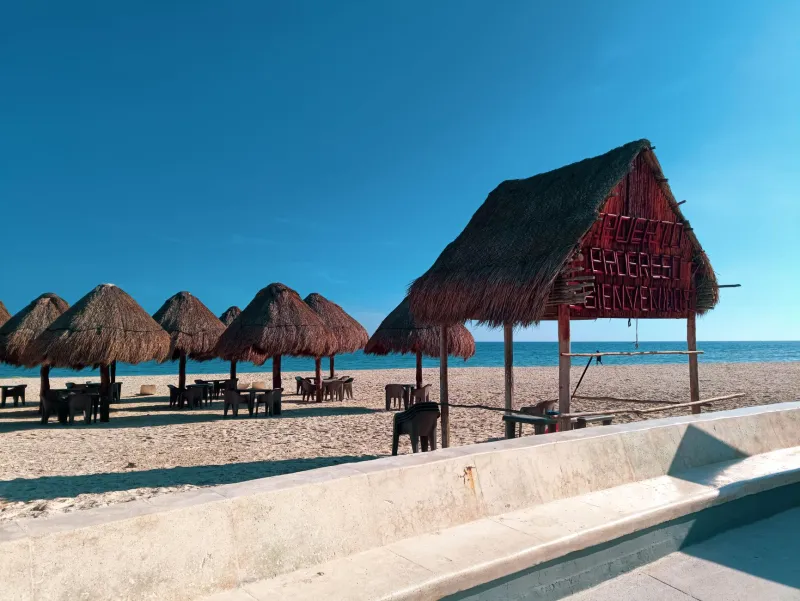
You probably know the feeling. You spent a week at some gorgeous stretch of Dominican coastline, found a beach bar that felt like your personal discovery, and told every friend back home about it. You maybe even looked it up online before your next trip—only to find no trace of it. No Instagram. No Google listing. Just a vague memory of a thatched roof and a bartender named Julio who made a mean rum punch.
This isn't nostalgia playing tricks. Dominican beach bars genuinely do vanish at a startling rate. And the reasons behind it are more complicated—and more worth understanding—than most tourists ever realize.
The Illusion of Permanence
When a beach bar looks like it's been there forever, it's easy to assume it has been. Weathered wood, faded hand-painted signs, a cooler that looks like it survived three hurricanes—these things read as permanence. But a lot of those details are just the aesthetic of tropical informality. Many Dominican beach bars operate on short-term land leases, verbal agreements with local landowners, or informal arrangements that can unravel fast.
"People think because a place has been there five years, it will be there five more," said one bar owner in Las Terrenas who asked not to be named because of an ongoing lease dispute. "But a lot of us are one conversation with a landlord away from packing up."
Land values along the DR's most popular coastlines have climbed sharply over the past decade, especially in areas like Samaná, Cabarete, and stretches near Punta Cana that were once considered off the beaten path. When a patch of beachfront suddenly looks attractive to a hotel developer or a wealthier investor, the informal operators who've been running a cooler and a few plastic chairs there tend to lose out.
Seasonality Is Brutal
The Dominican Republic draws tourists year-round, but the distribution isn't even. Winter months—roughly December through March—pack the beaches with American and European travelers. Summer sees a different crowd, including a significant influx of Dominican diaspora returning from the US and Europe. But the shoulder seasons? They can be rough.
A beach bar that does $800 in sales on a busy February Saturday might do $80 on a Tuesday in October. Fixed costs—staff wages, ice, generator fuel, restocking—don't disappear just because the tourists do. Many owners told us they essentially work eight good months to survive four slow ones, and that math doesn't always work out.
"The ones who make it understand that you're not just running a bar," explained one Cabarete local who has watched the town's beach bar landscape shift dramatically over 15 years. "You're running a business that has to survive a famine every year. Most people figure that out too late."
Competition From the Resort Machine
The growth of all-inclusive resorts along the Dominican coast has been a double-edged sword for independent beach bar owners. More tourists means more potential customers—but all-inclusive guests often never leave the property. When they do wander out, they've already paid for unlimited drinks and are sometimes reluctant to open their wallets elsewhere.
Some independent bars have adapted by positioning themselves as the "authentic alternative" to resort monotony, leaning into local food, live music, and the kind of atmosphere you genuinely can't manufacture at a Barceló or an Iberostar. That strategy works—but it requires real investment in what makes a place worth visiting, not just a location on the sand.
Others have tried to compete on price, which is usually a losing game when you're buying supplies at local market rates while a resort is importing in bulk.
When Hurricanes and Hard Weather Win
The Dominican Republic sits in the Atlantic hurricane belt. Most travelers know this in the abstract but don't fully reckon with what it means for small coastal businesses. A direct hit or even a near-miss storm can wipe out a beach bar's physical structure entirely. Insurance, when it exists at all, rarely covers the full cost of rebuilding—and even if it does, the process can take months.
Some owners rebuild. Others decide the risk isn't worth it, especially if they were already operating on thin margins. What tourists experience as a "closed" bar is often the aftermath of a storm that happened long after they left and long before the next travel season began.
What You Can Actually Do
If you've ever felt that small pang of guilt leaving a beach bar without spending more, or wondered whether your five-dollar tip actually mattered—it did, and here's how to think about it going forward.
Pay in cash when you can. Card processing fees eat into already-thin margins, and some smaller bars don't have reliable card infrastructure anyway. Cash keeps more money in the hands of the people serving you.
Order the food, not just the drinks. Food margins are often better than drink margins at small beach bars, and a plate of tostones or fresh fish supports the operation more than another round of beers might.
Leave a real review. Not just a star rating—an actual written review on Google or TripAdvisor that describes the place specifically. These reviews help other travelers find the spot and give the owner something to show potential landlords or small business lenders as evidence of demand.
Come back at an off-peak time. If you're visiting the DR in summer or fall, make a point to seek out independent spots. Those are the months that determine whether a bar survives to the next high season.
Ask before you photograph and post. Some bar owners love the social media exposure. Others have complicated feelings about their informal operations being too publicly visible. A quick ask costs nothing and builds goodwill.
The Ones That Last
For all the turnover, some Dominican beach bars have been fixtures for decades. The ones that survive tend to share a few traits: they've built genuine relationships with the communities around them, they've diversified beyond just drinks (food, music, events, local tours), and they've found a way to be relevant to both tourists and Dominicans—not just one or the other.
They've also usually figured out the land situation. Whether through ownership, long-term lease, or a relationship with a landowner who values their presence, the bars that last tend to have some version of stability beneath their feet.
The precariousness of Dominican beach bar culture is, in a way, part of what makes it feel alive. These aren't franchise operations with corporate safety nets. They're real people making real bets on a beautiful but unpredictable coastline. When you find one that feels right, treat it like the fragile, wonderful thing it is.
Because next time you visit, it might just be gone—and you'll wish you'd ordered one more round.