Why Dominican Beaches Hit Different: The Science Behind That Feeling You Can't Quite Name
You step off the plane, make it through the drive, and finally — finally — you're standing at the edge of a Dominican beach. The water is doing that thing where it's somehow three shades of blue at once. The air smells like salt and something faintly floral you can't identify. And within about twenty minutes, your shoulders drop two inches and you genuinely cannot remember what you were stressed about on Monday.
This happens to a lot of people. And most of them chalk it up to "vacation mode" or the open bar at the resort. But there's more going on here than psychology. The Dominican Republic's coastline has a specific combination of environmental factors that, when stacked together, create a sensory experience that's measurably different from what you'd find on beaches in, say, Cancún, the Bahamas, or even neighboring Puerto Rico.
Let's break down what's actually happening.
The Sand Is Doing More Than You Think
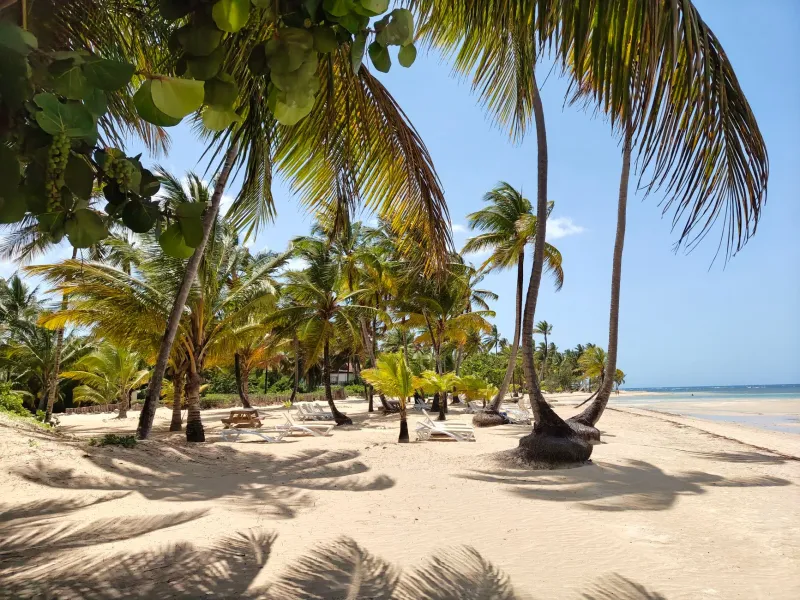
Not all white sand is created equal. The powdery stuff you find along the DR's north coast — especially around Cabarete and Playa Grande — has a different mineral composition than the coarser, coral-heavy sand common in parts of the Bahamas or the volcanic black and gray sands you'd encounter in other island chains.
Dominican beach sand is largely silica-based, often ground down over centuries from limestone and coral formations. Silica sand reflects heat more efficiently than coral-based sand, which is part of why you can walk barefoot in the DR at noon without performing that hilarious hot-sand sprint. The texture also plays a role — finer sand has more surface area per grain, which means it releases heat faster after sunset and stays cooler underfoot during peak hours.
There's a tactile psychology element here too. Studies on sensory grounding — the practice of physically connecting with natural surfaces — suggest that the texture of fine sand underfoot activates proprioceptive feedback in ways that coarser surfaces don't. In plain English: walking on the right kind of sand can actually calm your nervous system. The DR's beaches, particularly along stretches like Playa Rincón in the Samaná Peninsula, are basically built for this.
The Humidity Sweet Spot
Here's where it gets interesting for anyone who's ever suffered through a Florida summer and wondered why it felt so punishing compared to a beach day in the DR.
The Dominican Republic sits in a humidity band that — particularly along its northern and eastern coasts — tends to hover between 65 and 75 percent during peak travel months. That might sound high, but it's actually a kind of sweet spot for human comfort. Compare that to South Florida, which regularly clocks in above 85 percent in summer, or parts of coastal Louisiana that can hit 90 percent and above.
At moderate humidity levels, sweat evaporates efficiently, which keeps your body's cooling system working the way it's supposed to. You feel warm, but not oppressed. The air feels full without feeling suffocating. Meteorologists sometimes describe this range as the "perceived comfort zone" for tropical climates, and the DR's trade wind patterns — which funnel consistent breezes across the northern coast especially — help maintain it.
Those trade winds, by the way, aren't random. The Cibao mountain range running through the interior of the island acts like a natural airflow manager, channeling wind patterns toward the coast in ways that keep sea breezes consistent rather than gusty and unpredictable. It's one reason Cabarete became a world-class kitesurfing destination — and it's also why sitting under a palapa there feels like someone installed a natural air conditioner.
What the Water Is Actually Doing to Your Brain
The color of Dominican coastal water isn't just aesthetically pleasing — it's a byproduct of specific oceanic conditions that have a measurable effect on how people feel.
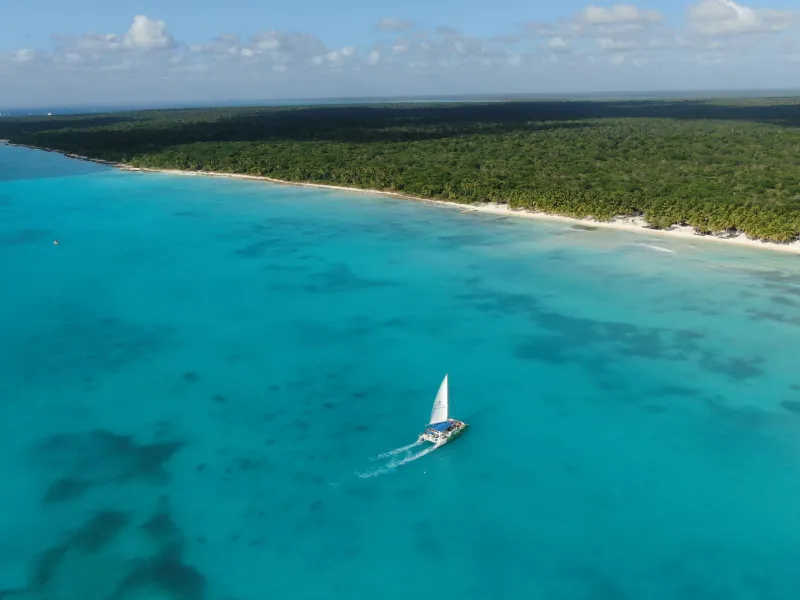
The Caribbean Sea along the DR's coast is exceptionally clear, with visibility in some areas reaching 100 feet or more. That clarity comes from low levels of phytoplankton and sediment, which also means the water scatters light differently than murkier Atlantic or Gulf Coast waters. The result is that particular turquoise-to-cobalt gradient that shows up in every photo taken here and somehow still looks fake.
Researchers studying "blue space" — the psychological effects of being near water — have found that visually complex, high-clarity water environments trigger stronger relaxation responses than turbid or monotone water. The brain, apparently, responds to the visual depth and color variation of clear tropical water in ways similar to how it processes natural art. You're not just looking at the ocean. On some level, your nervous system is drinking it in.
Water temperature matters too. The DR's coastal waters sit between 78°F and 84°F depending on season and location — warm enough to be immediately comfortable, but not so warm that you lose the refreshing contrast with the air temperature. That contrast is important. The mild thermal shock of entering water that's slightly cooler than your body temperature triggers a small endorphin response. It's the same mechanism behind cold plunge therapy, just much, much more pleasant.
The Smell Factor Nobody Talks About
Ask someone what a Dominican beach smells like and they'll usually say something like "the ocean, but better." That's not just nostalgia talking.
Coastal air in the DR carries elevated concentrations of negative ions — electrically charged particles generated by wave action, sunlight, and the evaporation of seawater. Negative ion exposure has been studied in connection with serotonin regulation, and while the science is still being refined, the general finding is consistent: people report better mood and lower anxiety in high-negative-ion environments. Beaches near active wave breaks — like the surf zones along Playa Encuentro or the windward shores of the Samaná Peninsula — tend to have particularly high concentrations.
There's also the botanical layer. The DR's coastal vegetation — sea grapes, coconut palms, tropical flowering shrubs — releases aromatic compounds that blend into the salt air in a way that's distinct from, say, the piney coastal air of the Carolinas or the dry desert-meets-ocean smell of Baja California. It's a specific olfactory cocktail, and your brain files it under "safe, warm, good." Which is exactly where you want to be.
So Is It Magic, or Just Good Geography?
Honestly? A little of both.
The Dominican Republic's coastline benefits from a genuinely unusual combination of factors: the right sand composition, favorable trade wind patterns, a mountain range that shapes airflow, water clarity driven by low sediment load, and a latitude that puts it in one of the most consistently pleasant humidity bands in the Caribbean. None of these things individually would be enough. Together, they create something that travelers keep trying to describe and never quite getting right.
"I've been to a lot of beaches," one traveler from Chicago told us on a trip to Las Terrenas last winter. "I can't explain it. It just feels like my body knows it's supposed to be here."
That's not just the rum talking. That's geography, atmospheric science, and sensory psychology working in concert. The DR didn't get its reputation for incredible beaches by accident — the island is, in a very literal sense, optimized for this.